
Healthcare and Life Sciences: Supply Chain and Planning
Healthcare supply chain planning covers demand forecasting, inventory positioning, replenishment for medical products and pharmaceuticals, and supplier coordination. Planners work across the ERP, a planning system, distributor and supplier portals, and spreadsheets used for allocation and shortage tracking. Effort concentrates on reconciling forecasts, resolving shortages and managing expiry and lot constraints.
Supply Chain and Planning in Healthcare
Healthcare supply chain planning covers demand forecasting, inventory positioning, replenishment for medical products and pharmaceuticals, and supplier coordination. Planners work across the ERP, a planning system, distributor and supplier portals, and spreadsheets used for allocation and shortage tracking. Effort concentrates on reconciling forecasts, resolving shortages and managing expiry and lot constraints.
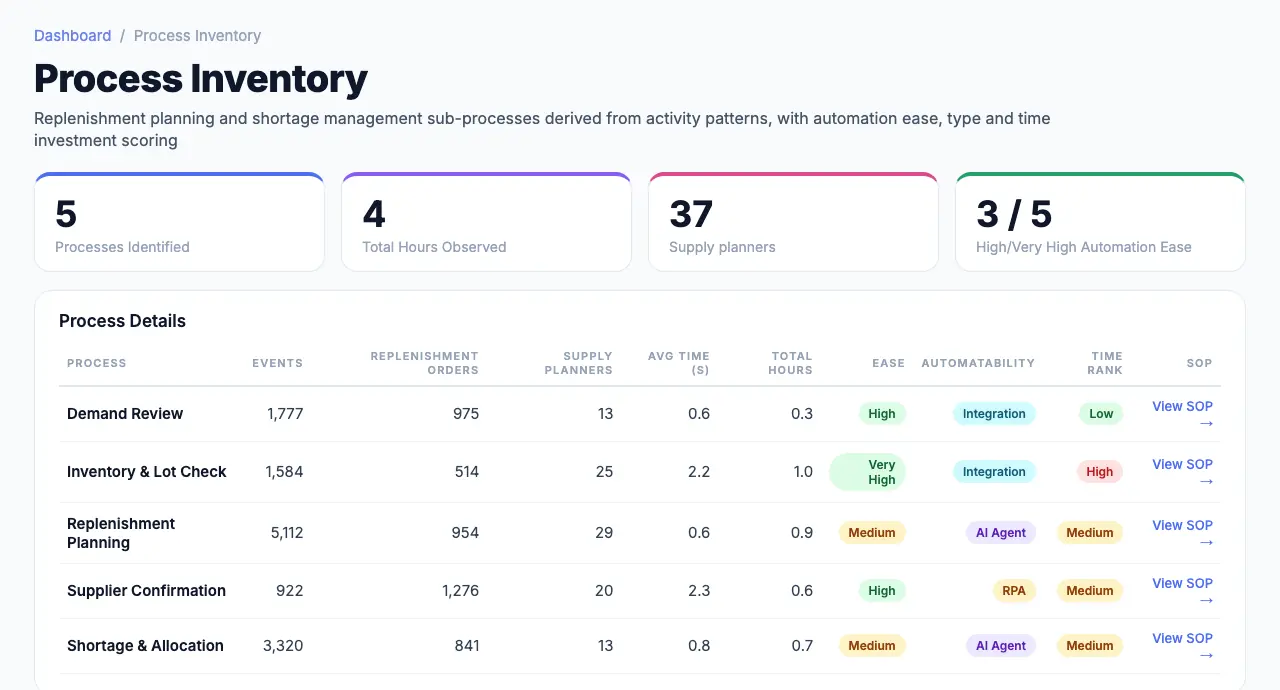
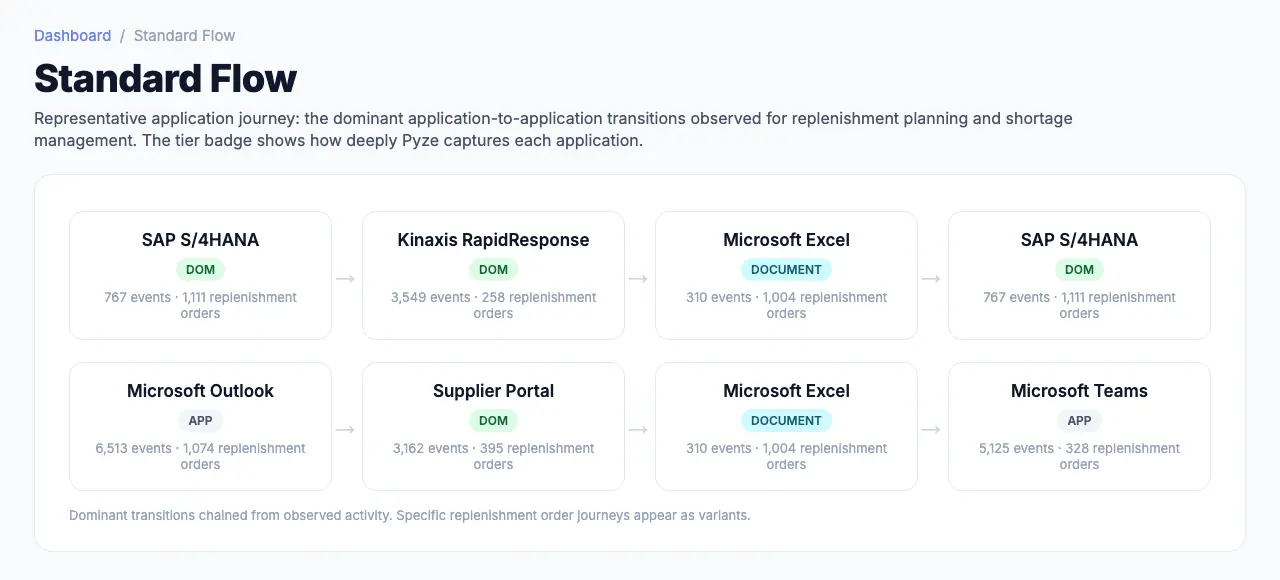
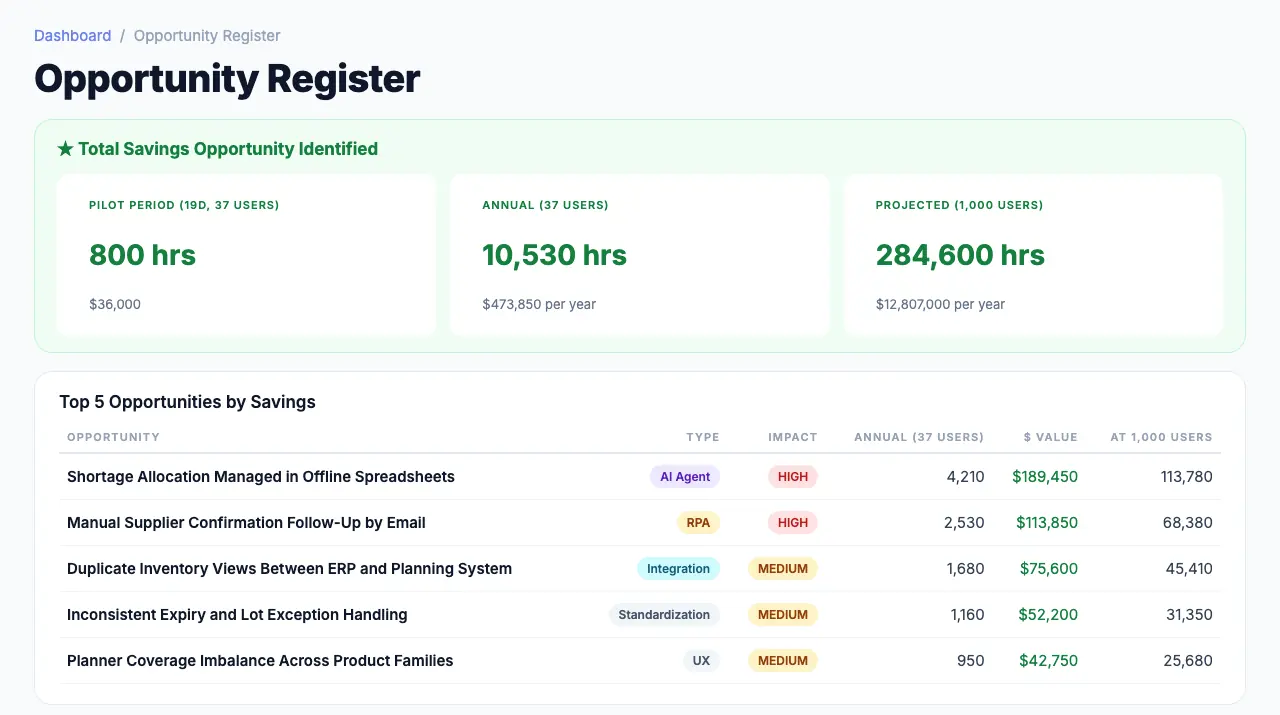
Example product views. Figures shown are illustrative.
What Pyze Measures
- Elapsed and hands-on time per planning stage
- Application and screen sequence from demand review to allocation
- Time spent in spreadsheets compared with planning systems
- Variation in exception handling paths across planners
Typical Findings
- Shortage management relies on spreadsheets that are rebuilt from ERP and planning system views for each review cycle.
- Supplier confirmations are tracked through email threads and portal checks, with repeated status lookups for the same orders.
- Lot and expiry exceptions are handled through different paths depending on the planner and product family.
What the Opportunity Register Supports
- Supports a ranked register of planning steps suited to integration between the ERP and planning system.
- Quantifies the effort in spreadsheet-based allocation where an AI agent could prepare options for the planner.
- Supports standardizing exception handling for lot, expiry and supplier constraints.
Example Opportunities
- 1.Shortage Allocation Managed in Offline Spreadsheets AI Agent Agentify
- 2.Manual Supplier Confirmation Follow-Up by Email RPA Automate
- 3.Duplicate Inventory Views Between ERP and Planning System Integration Simplify
- 4.Inconsistent Expiry and Lot Exception Handling Standardization Standardize
- 5.Planner Coverage Imbalance Across Product Families UX Rebalance
Roles and Titles
- Chief Operating Officer
- Head of Supply Chain
VP Supply Chain, SVP Supply Chain, Chief Supply Chain Officer
Supply Chain and Planning in Other Industries
Other Healthcare and Life Sciences Functions
See This on Your Own Work
A measured baseline before anything changes, then a priced and owned list of what to do about the gaps.