
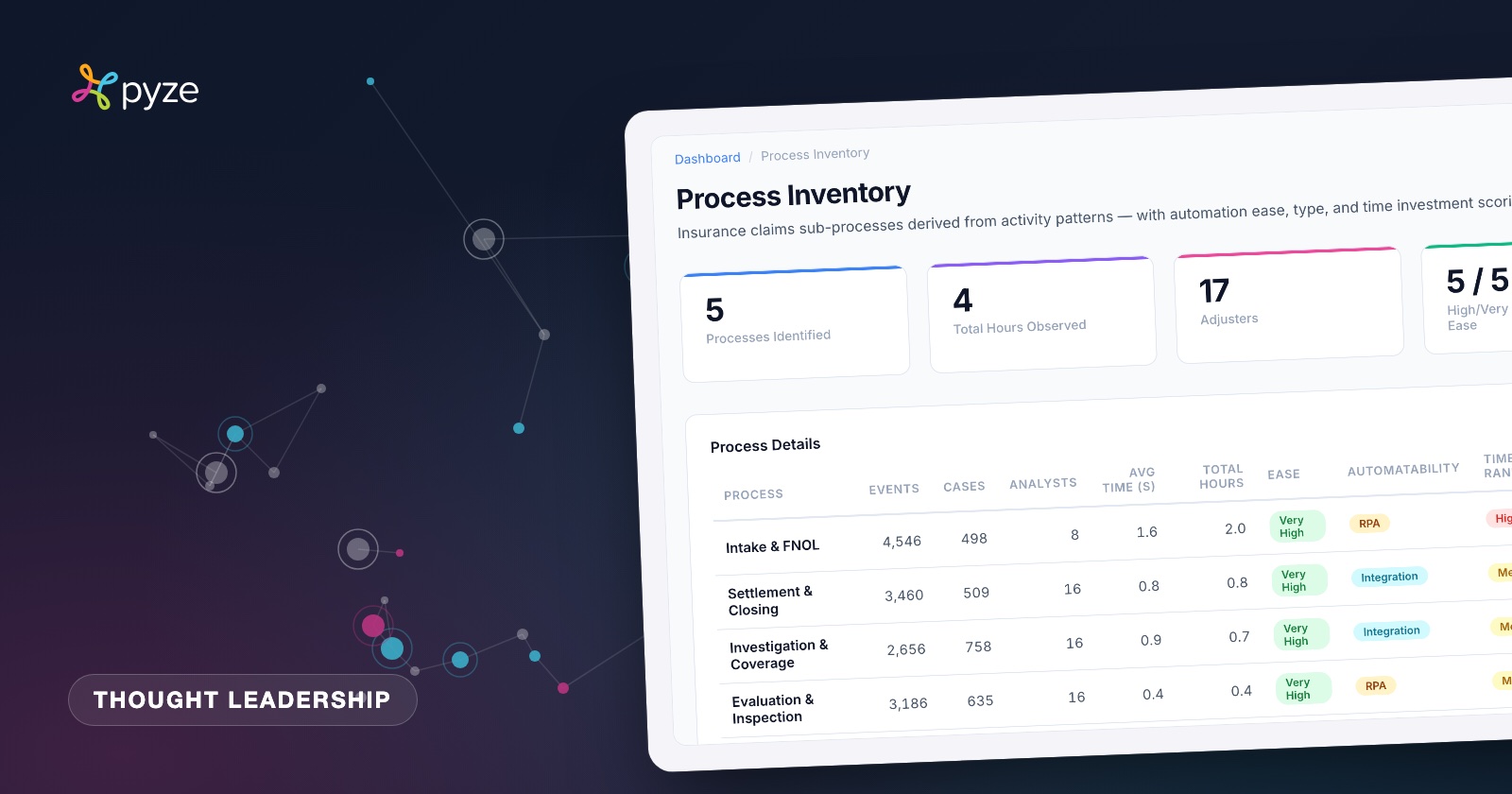
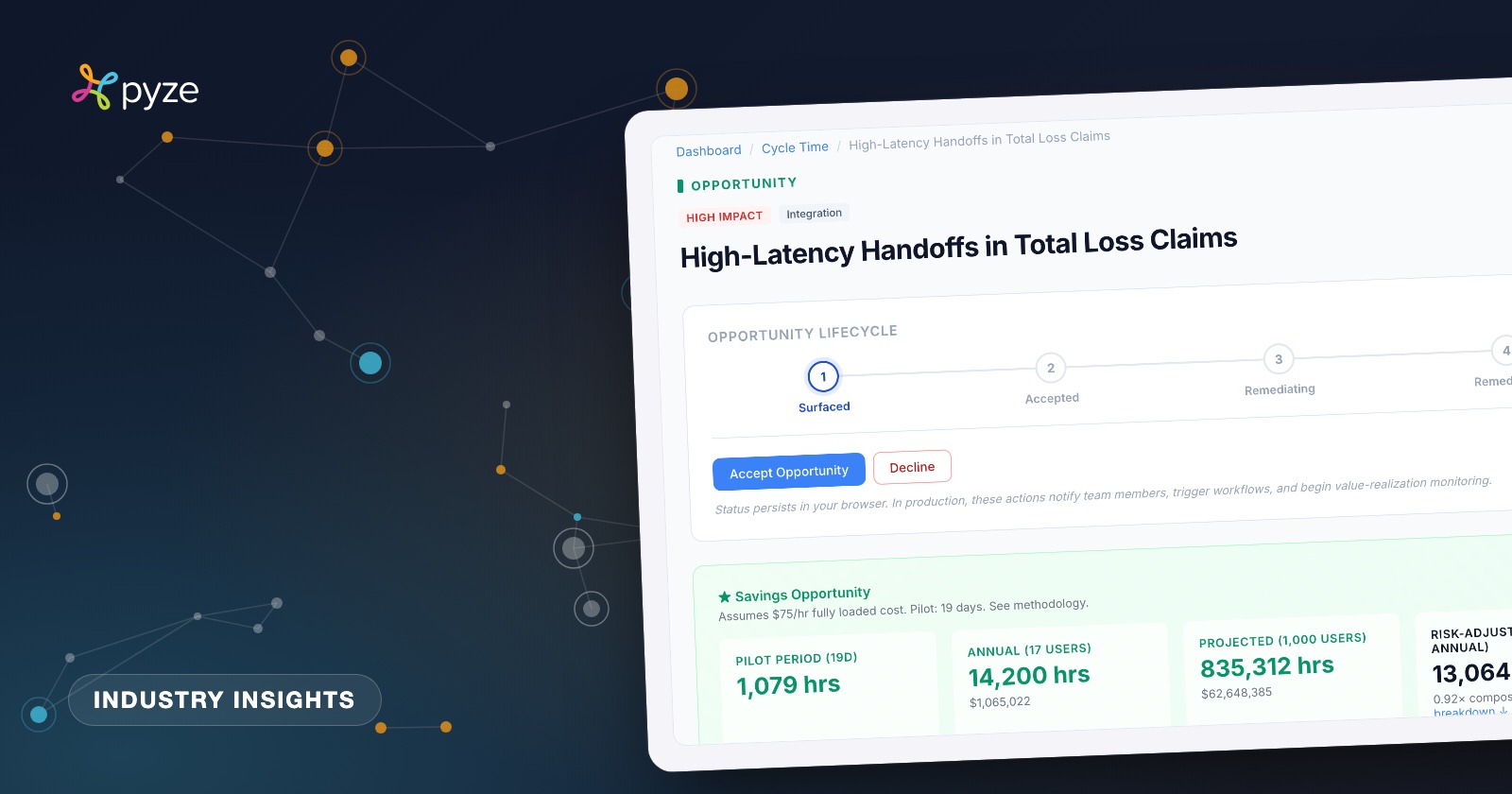
Measure How Safety Case Processing Work Is Performed
Pyze measures the steps performed across safety databases, coding tools, document systems and vendor environments, so intake, processing and review effort can be sized. Pyze does not make safety or clinical determinations.
Structural facts about the method and its timing. Results depend on the case mix, the number of systems involved and the vendor operating model.
Drug safety leaders are accountable for meeting reporting clocks for individual cases and aggregate reports, while case volumes, sources and vendor arrangements change. The safety database records each case, its status and its dates. It does not record the work performed to process the case: the triage of incoming reports, the entry and coding of case data, the narrative drafting, the follow-up and the quality review. Pyze measures that work as execution metadata. Pyze does not assess causality, seriousness, expectedness or any other medical or regulatory judgment about a case. Those determinations remain with qualified safety personnel.
Questions Asked of This Role
Reporting clock compliance for expedited and periodic reports as case volumes and sources change
Case intake volume and triage from multiple channels, with duplicate and non-valid reports to filter
Coding and narrative writing effort, which varies by case complexity
Rework generated at quality review, which extends processing time and consumes experienced staff
Consistency of processing across outsourced vendors and internal teams
Key Questions and Outcomes
Each question shows the answer available today, why that answer is insufficient, and what changes with Pyze.
What drives case processing time, and where is capacity needed ahead of reporting deadlines?
Case counts, status durations and compliance rates from the safety database.
Status durations show elapsed time in each state. They do not show the effort of the steps within the state or the work performed outside the safety database, such as searches in external sources and coding references.
Observed steps and effort by case type and processing stage, across the safety database and the applications around it, so capacity planning uses measured effort.
Why do cases return from quality review, and what does the rework cost?
Quality review error rates and categories from the quality review process.
Error categories show what was found. They do not show the effort of correcting each type or the steps repeated when a case returns to processing.
Repeated and corrective steps measured across the case lifecycle, so the effort attributable to rework is quantified by cause. Whether a case is correct remains a determination for your reviewers.
Is processing consistent between our teams and our vendors?
Vendor service level reports and periodic oversight audits.
Service level reports show output and timeliness. Audits cover a sample. Neither shows whether teams perform the same steps in the same way for the same case type.
Internal and vendor teams measured on the same basis at the process level, where the vendor environment is within the agreed scope, so differences in steps and effort are specific. Applicability depends on vendor agreement and access.
Engagement Sequence
Instrument the safety database, coding, document and intake applications in scope under your validation and change control requirements. Baseline effort by case type and stage without changing the process.
Opportunities documented and sized across the five levers, including intake steps that can be standardized, duplicate handling, and preparation of case information before processing begins.
Changes implemented and validated by your teams under your pharmacovigilance quality system. Measurement continues so the effect on effort and rework is compared with the baseline.
Frequently Asked Questions
Does Pyze see patient or adverse event data? +
No. Pyze captures application interaction metadata: which application, which screen, the sequence and the timing. It does not capture keystrokes, field values, free text or screen contents, so patient details, reporter information, narratives and case data are not collected. Collection is limited to an explicit whitelist of business applications, identifiers are pseudonymous, and the unit of analysis is the process.
Does Pyze make safety or clinical determinations? +
No. Pyze does not assess causality, seriousness, expectedness, reportability or any medical judgment about a case. It reports how processing work is performed and how it varies. All safety and clinical decisions remain with qualified personnel.
Can it be used with our outsourced case processing vendors? +
Where the vendor agrees and the applications are within the whitelist, yes. Measuring internal and vendor teams on the same basis allows their handling of the same case types to be compared. Scope depends on the contract and on how the vendor environment is accessed.