
Systems, People, Action
Three sources of evidence. Differences between them identify transformation opportunities, and each difference can be measured.
Most programs start from a single source: the system diagram, interview notes or a dashboard. Each covers only its own layer. Execution Intelligence analyzes systems, people and action together.
Systems
The process the applications are configured to run.
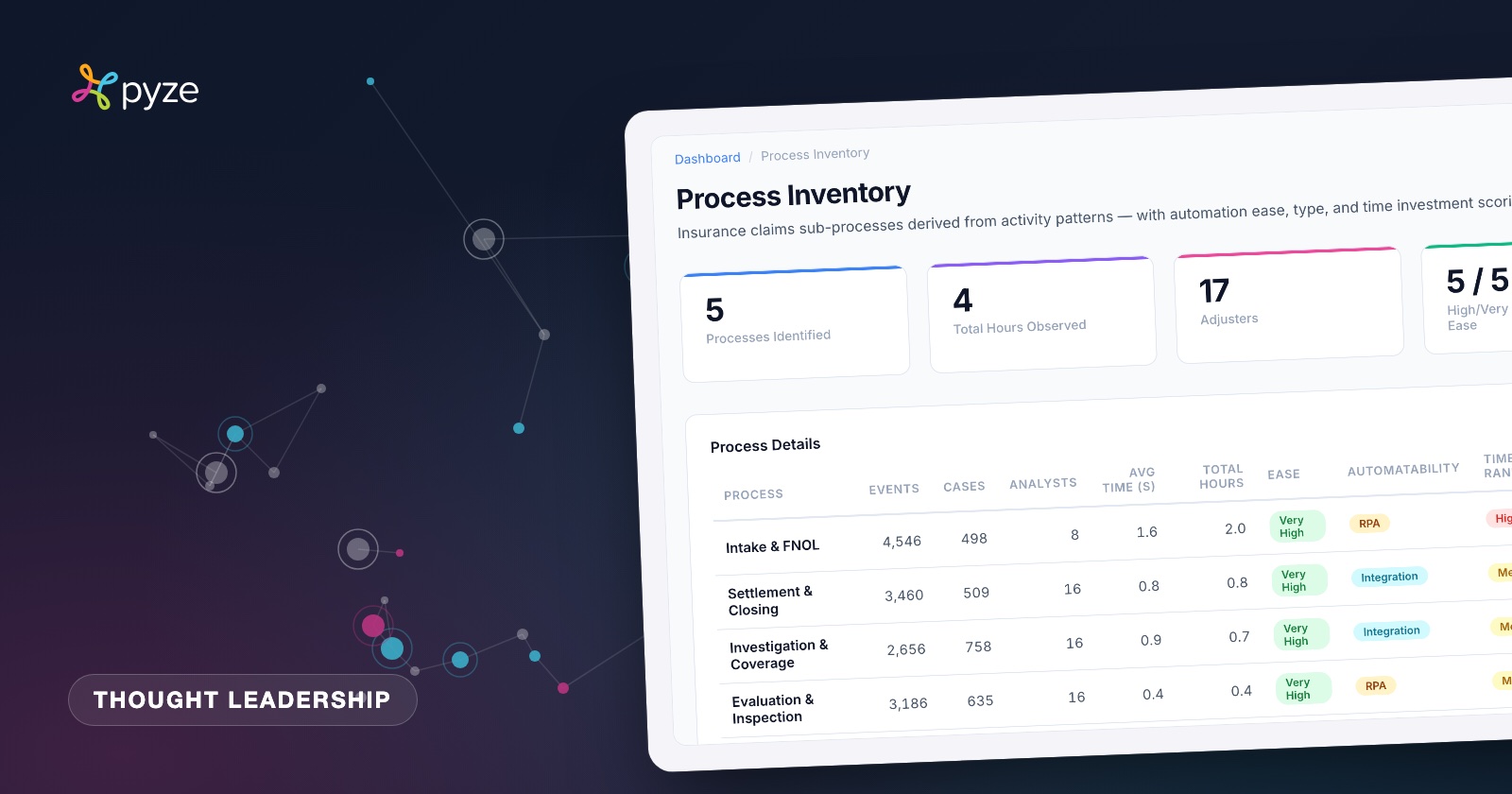
Every enterprise application encodes a process: workflow configuration, decision tables, validation rules and routing. Written procedures describe how the work should be performed. Pyze reads both, so the designed process is documented before stakeholder interviews begin.
- Business rules extracted from configuration instead of reconstructed in workshops
- Procedures parsed into a structured task tree
- One master standard, with the differences per team
- Gaps identified where no rule exists

People
How the work is performed.
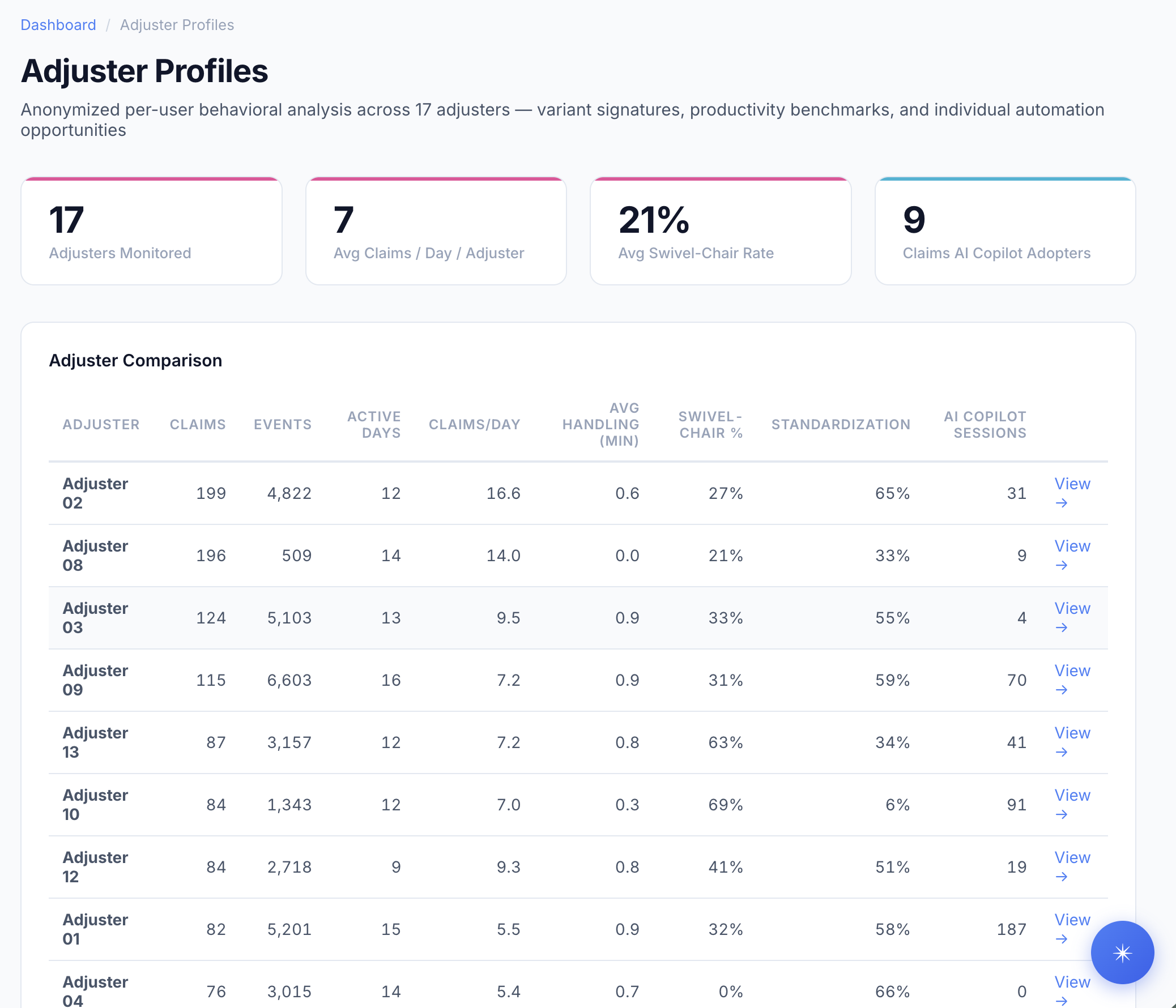
Execution data shows what people do inside and between applications: the order of steps, the time between them, the handoffs and the rework loops. It is captured as interaction metadata, and the unit of analysis is the process rather than the individual.
- Which application, which screen, the sequence and timing of actions
- Limited to an explicit whitelist of business applications
- Never keystrokes, field values, free text or screen contents
- Pseudonymous by design, anonymized at the source where required
Action
What to change, who owns it, and the measured result.
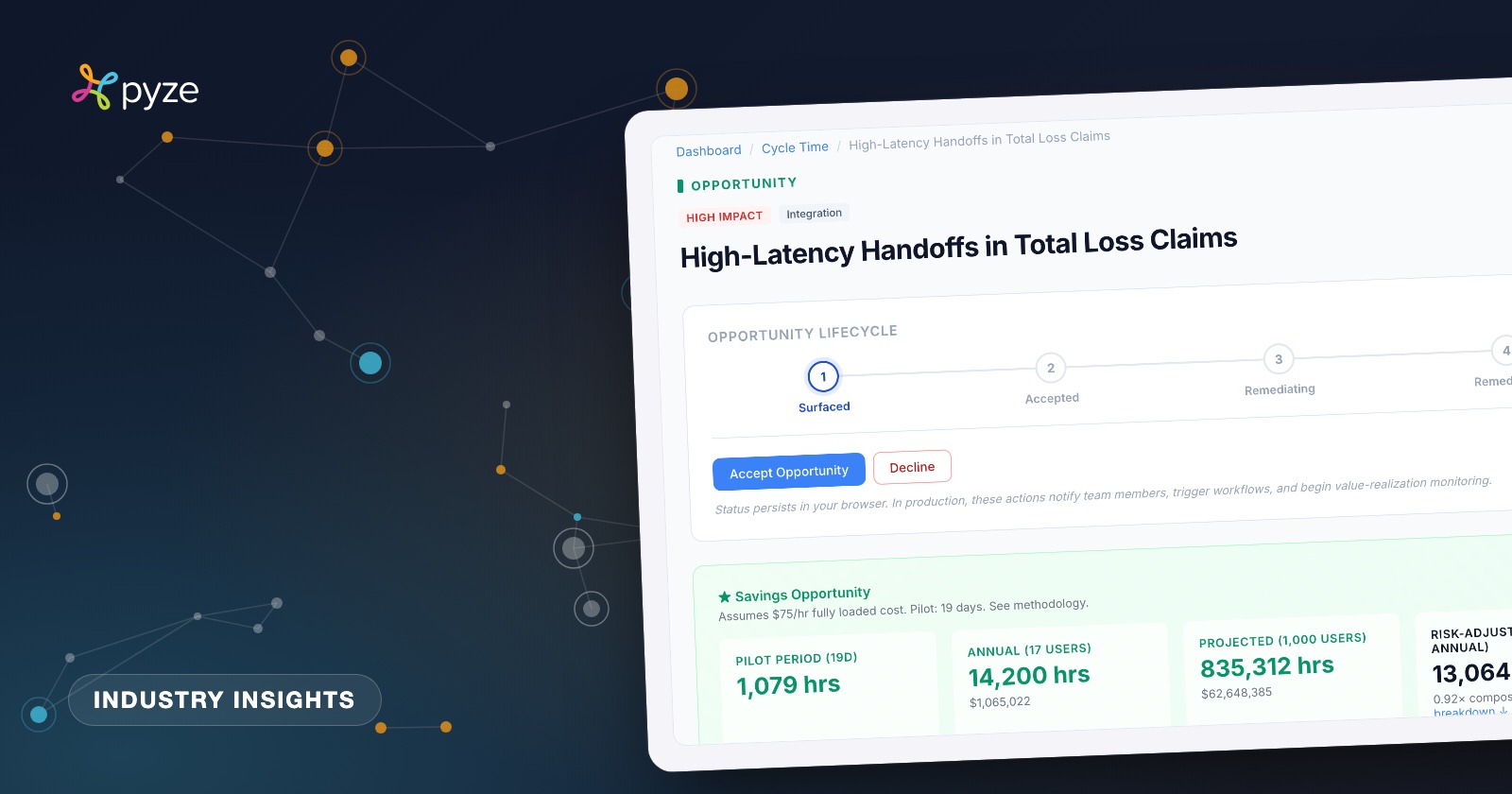
Where system configuration and observed behavior differ, the difference becomes a candidate for change. Each candidate is assigned an improvement type, quantified in hours, traced to case-level evidence and given an owner. After the change is implemented, the same baseline is used to measure the result.
- Standardize, Simplify, Rebalance, Automate, Agentify
- Each opportunity linked to the evidence it came from
- A named owner and a success metric for every item
- Before and after on the same baseline

On the People layer
Pyze measures how work is performed, not how individuals behave.
Apply the Three Layers to Your Process
A measured baseline before any change, followed by a quantified list of improvements with assigned owners.