
Blog
Perspectives on operationalizing enterprise AI, execution intelligence, and the future of work.
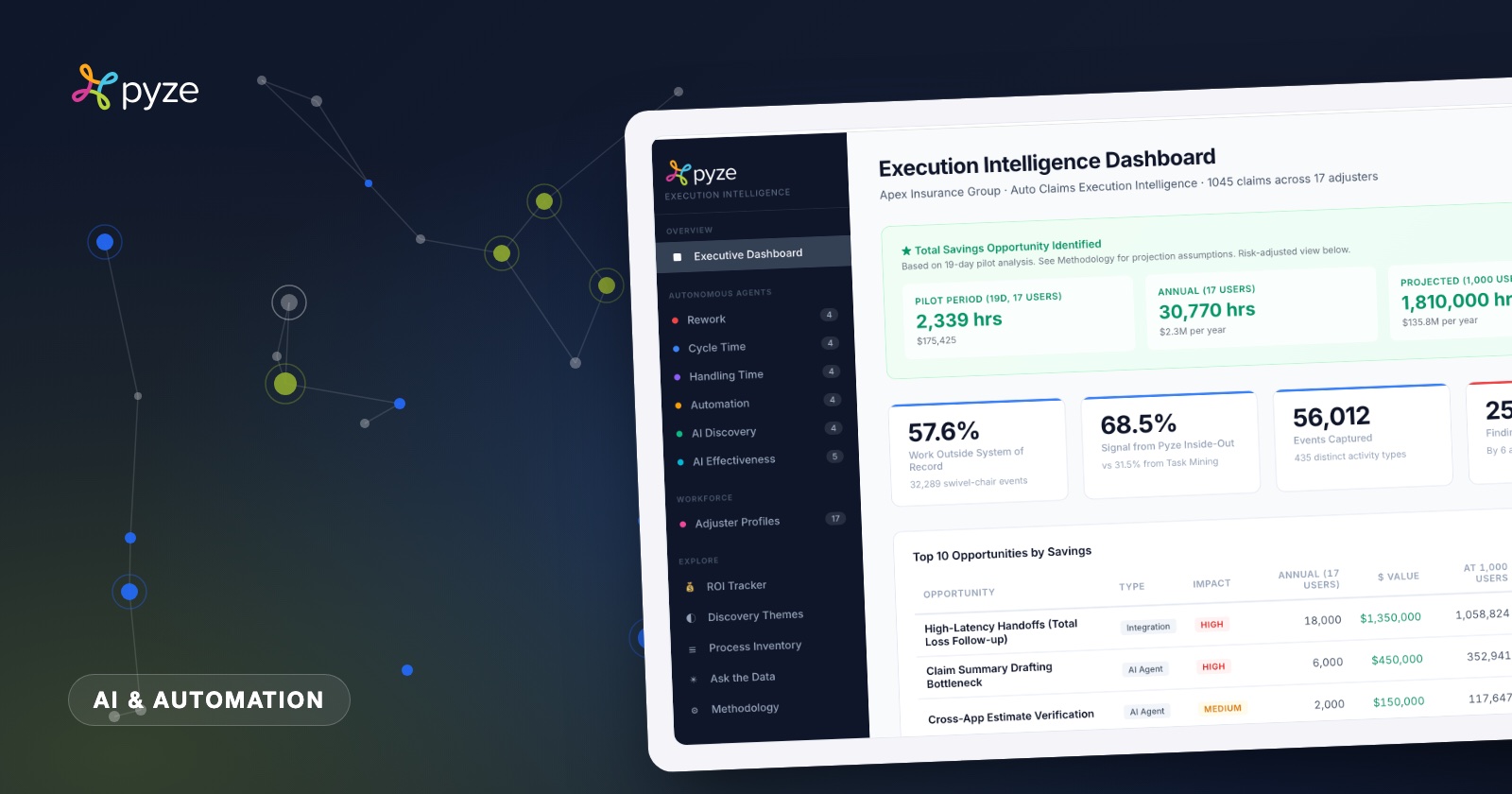
Why Enterprise AI Programs Stall on Data Readiness
The main constraint on scaling enterprise AI is trusted data about how work is performed, which is needed to decide what to automate and to measure the result.
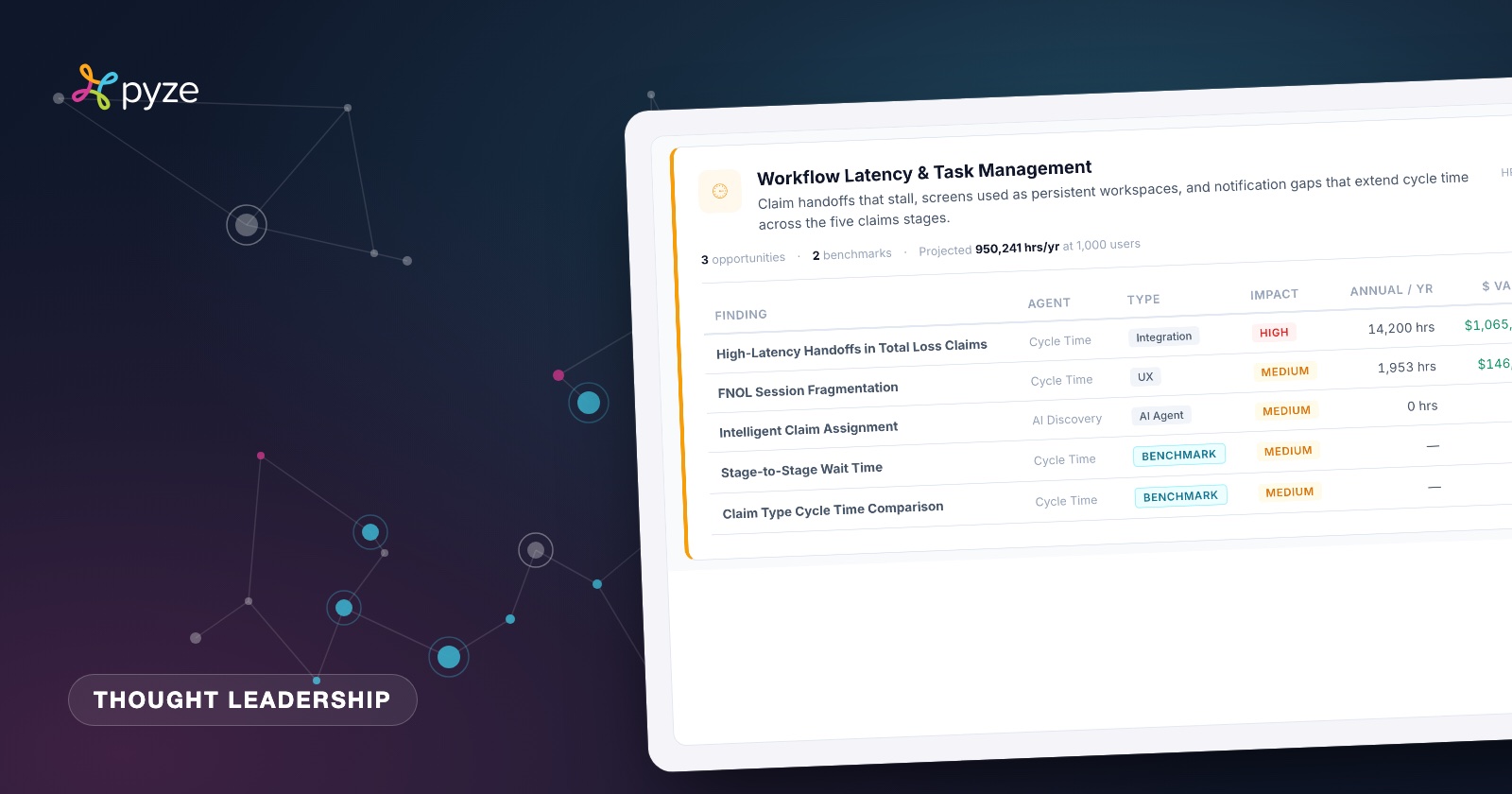
Why AI Agent Deployments Need Execution Intelligence
Most enterprises deploy AI agents based on assumptions about how work is done, and Execution Intelligence provides the observed data needed to decide where agents belong and to measure their results.
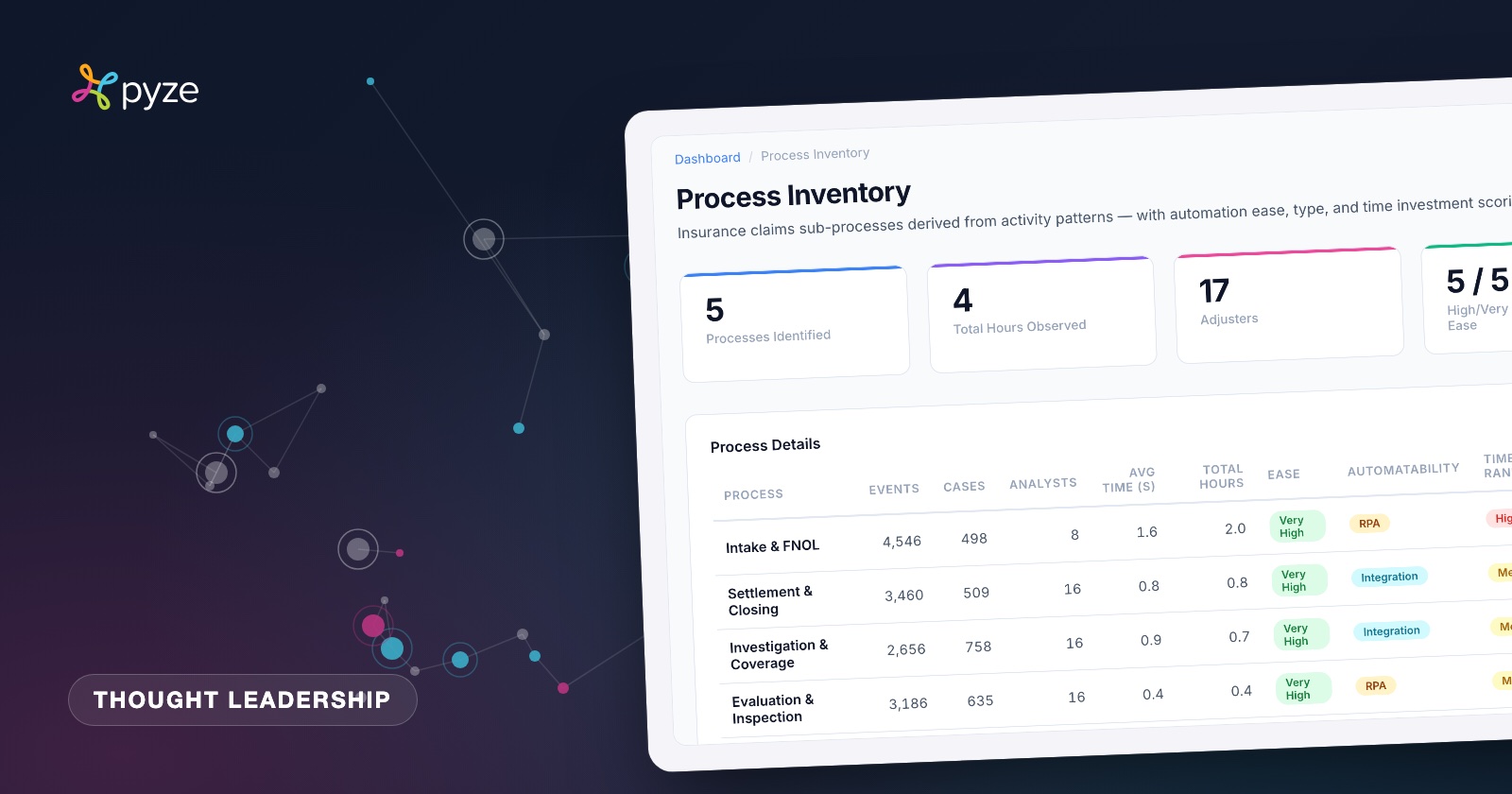
What Pyze Captures and What It Does Not
This post lists the data Pyze collects and the data it never collects, and suggests how to brief employees whose work is being measured.
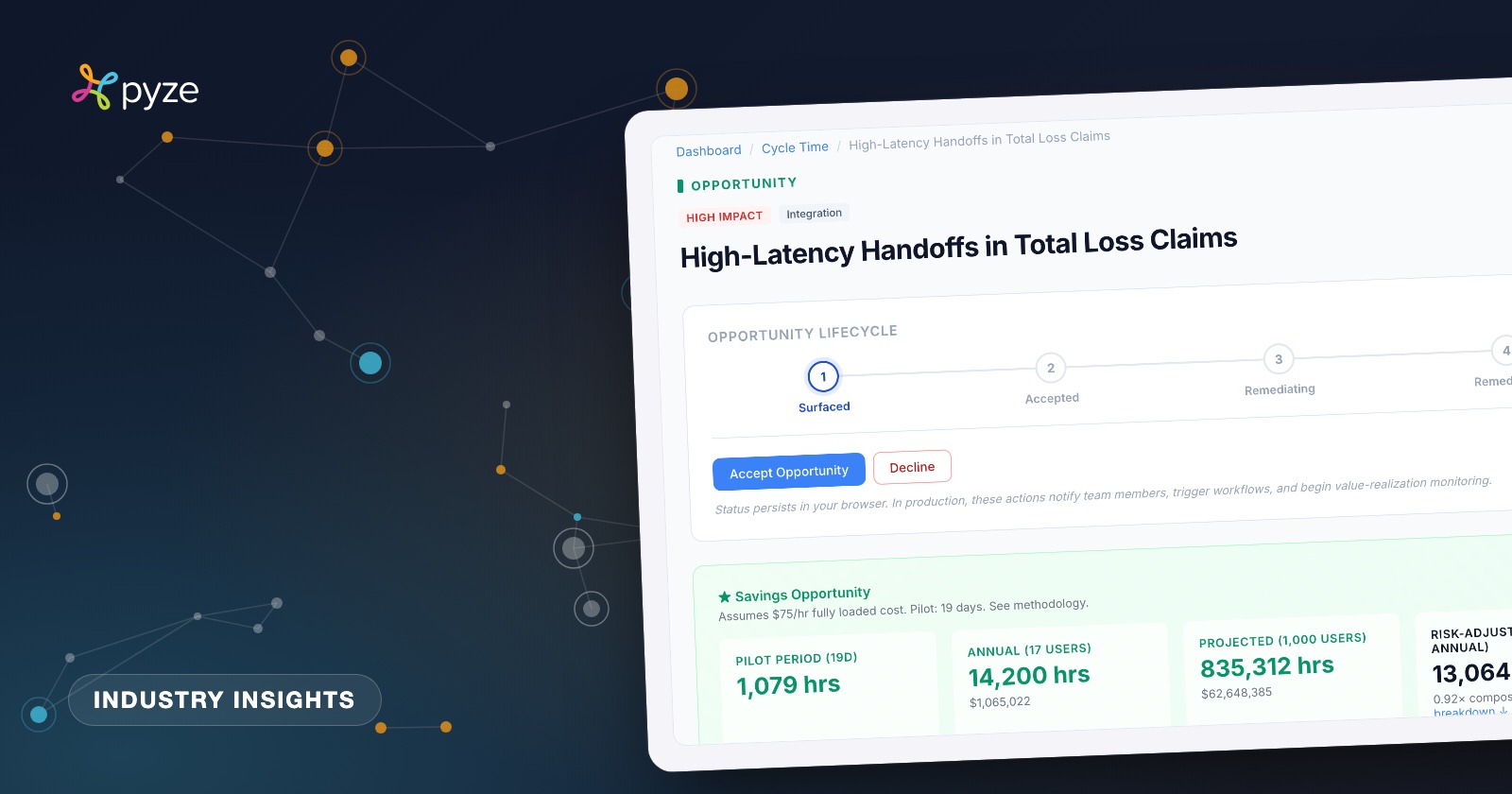
What an Execution Intelligence Assessment Delivers in Six Weeks
This post describes the week-by-week phases of an Execution Intelligence assessment, the prerequisites, and how the same evidence layer is used again after the change.
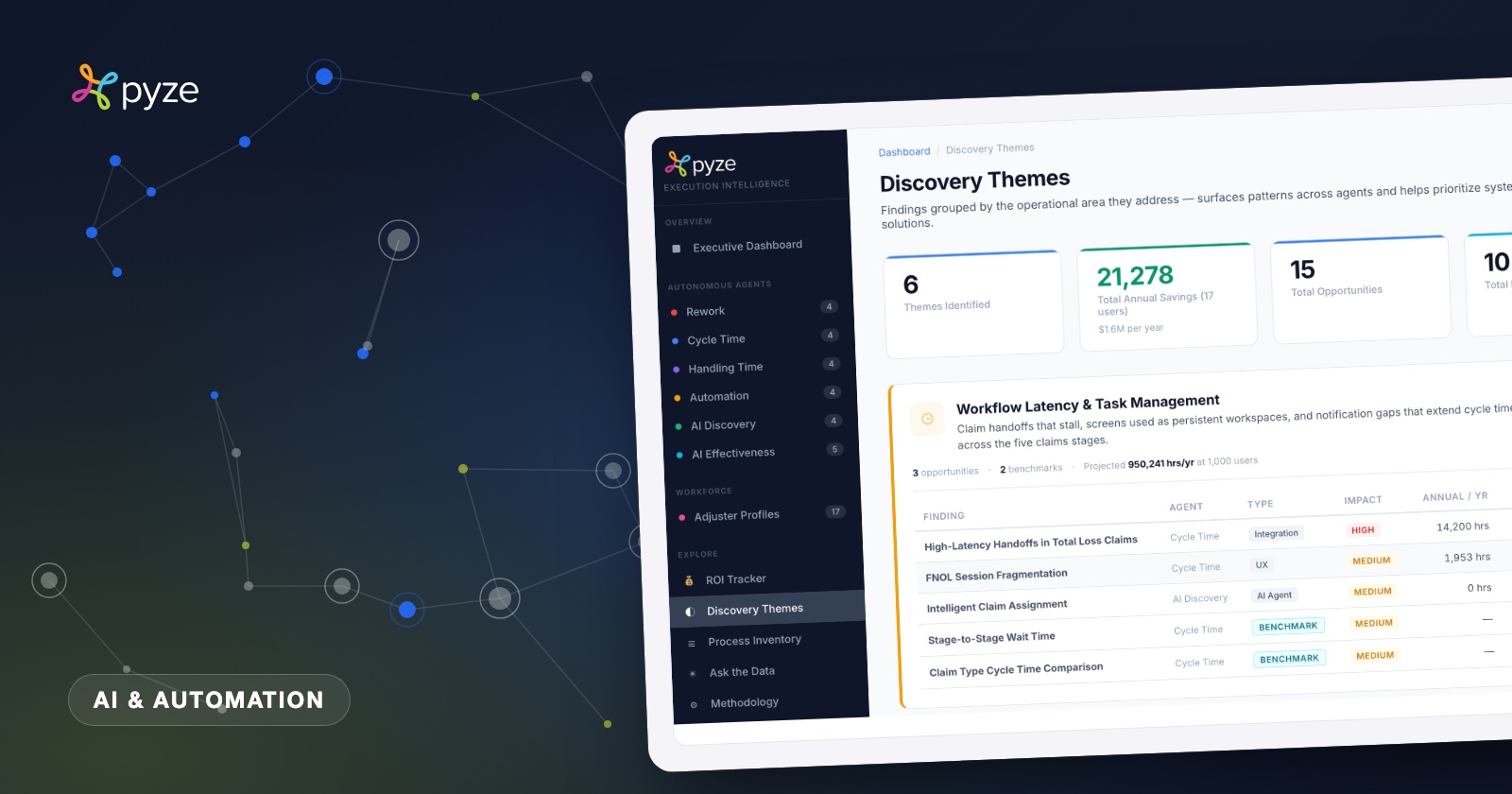
Scoring Work for Automation, Augmentation or Neither
A four-factor score computed from execution data identifies which tasks suit automation and which suit augmentation, and a cohort comparison measures the result.
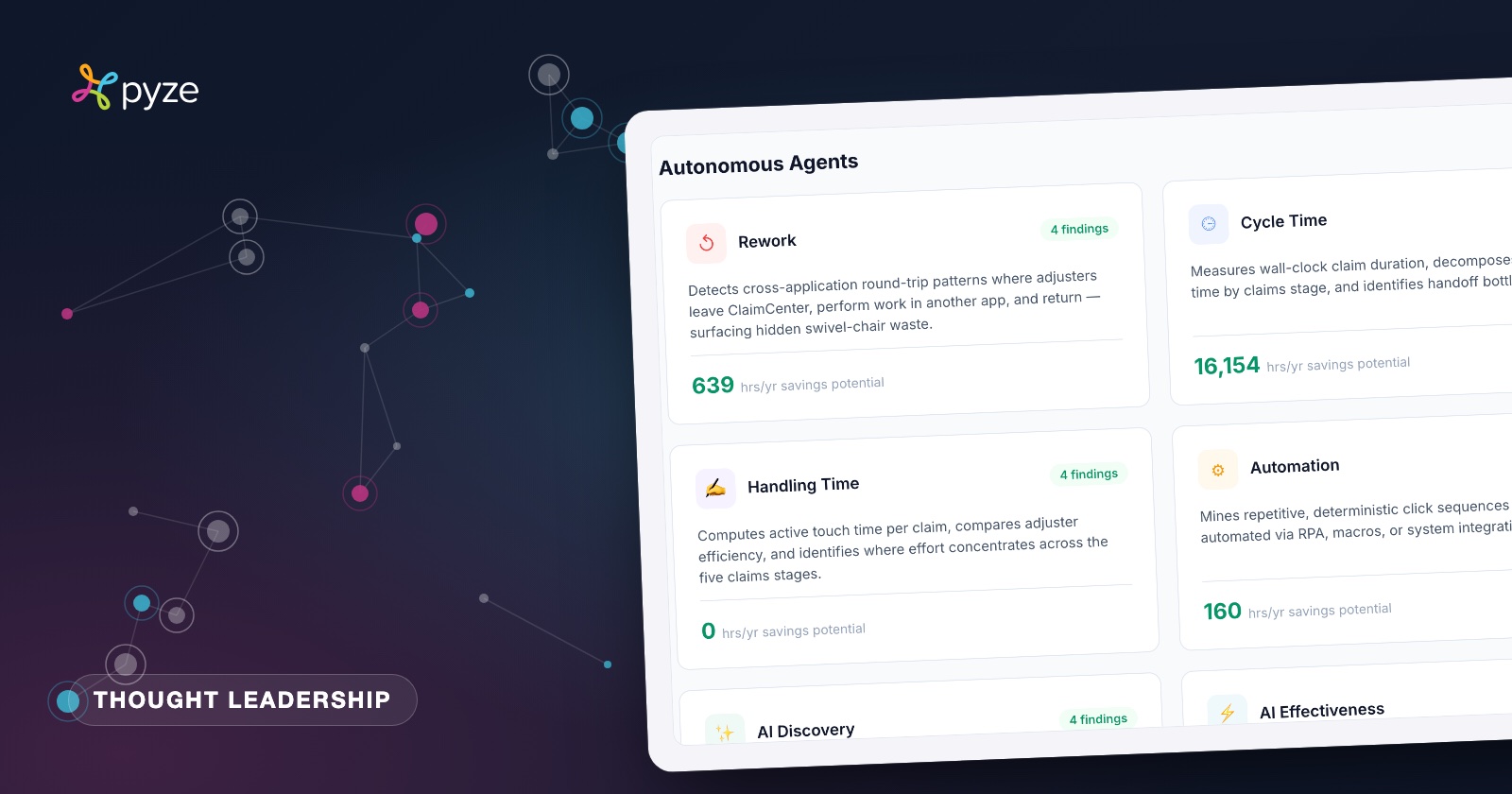
Sequencing Rebalancing, Standardization, Automation and Agents
Sorting observed work into four programs (rebalance, standardize, automate and agentify) and running them in order allows the value of each to be sized before any technology is deployed.
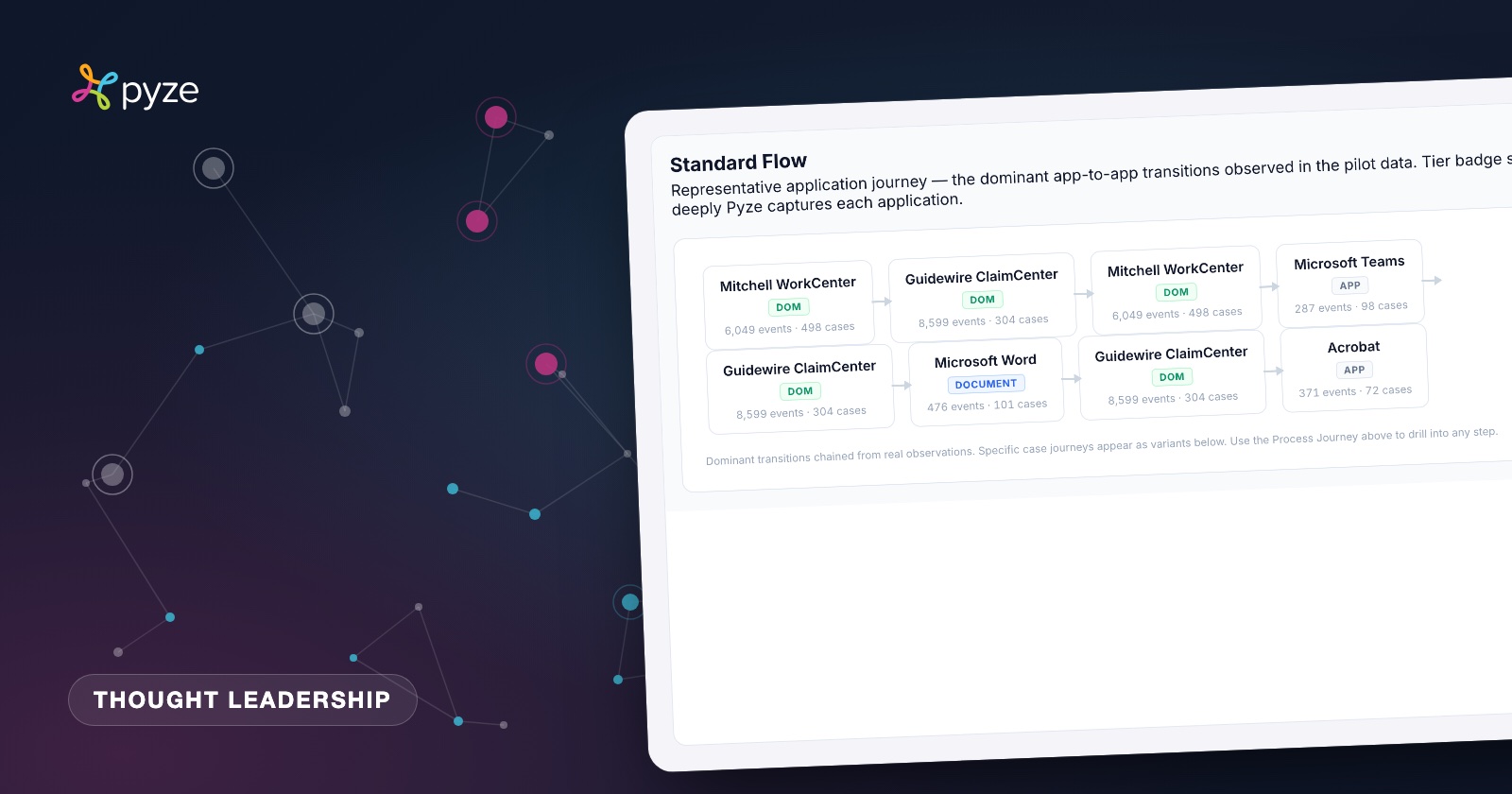
Using the Gap Between Configured and Observed Behavior as a Requirement Set
Comparing what a platform is configured to do with what people actually do identifies what to retire, what to fix and what to carry into the new design.
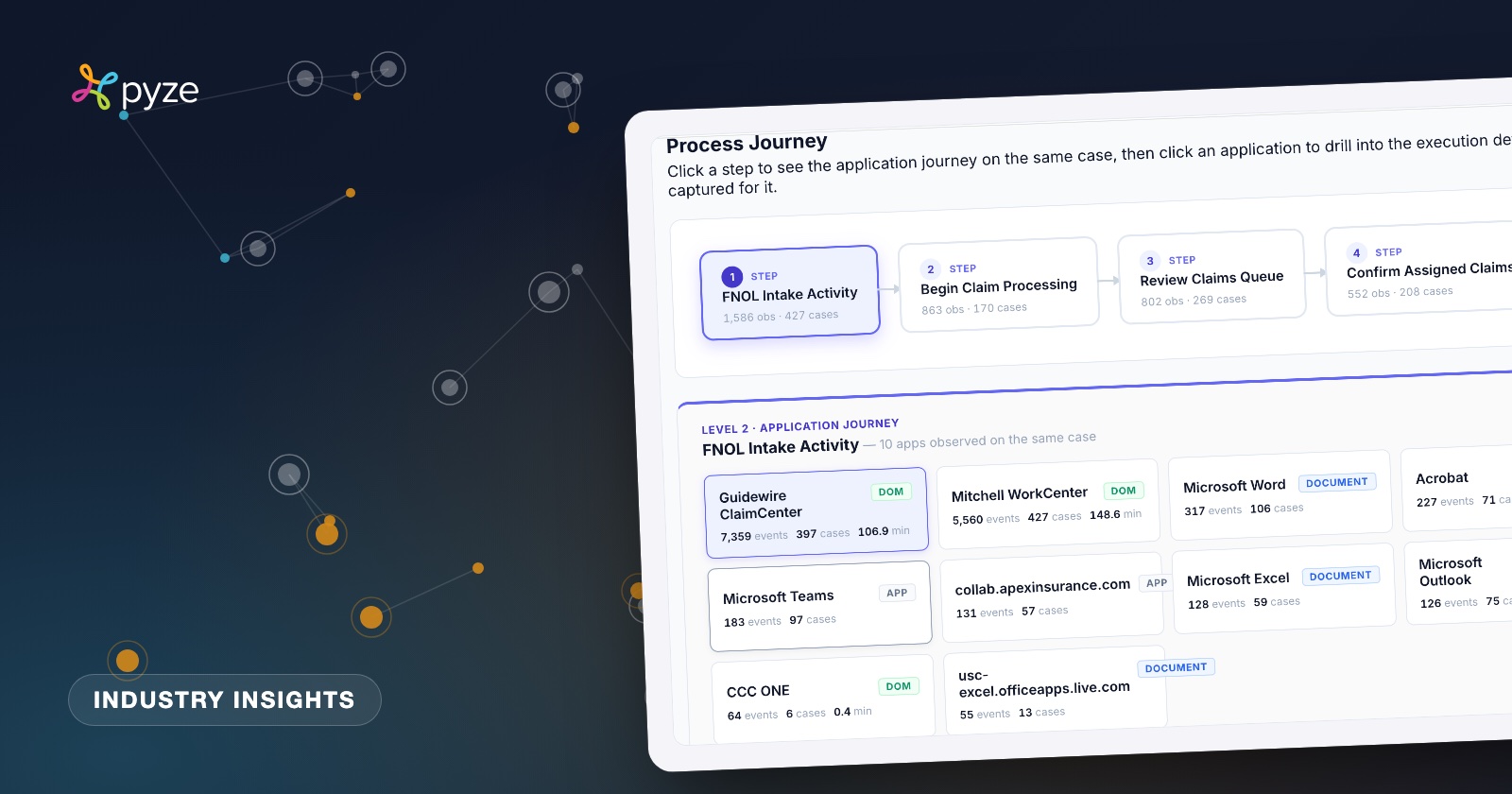
Reimagining a Pega Estate Starts With Requirements Recovery
Recovering rules and observing behavior before any rebuild gives a Pega modernization program a reliable requirement set, and workshops alone cannot do this at scale.
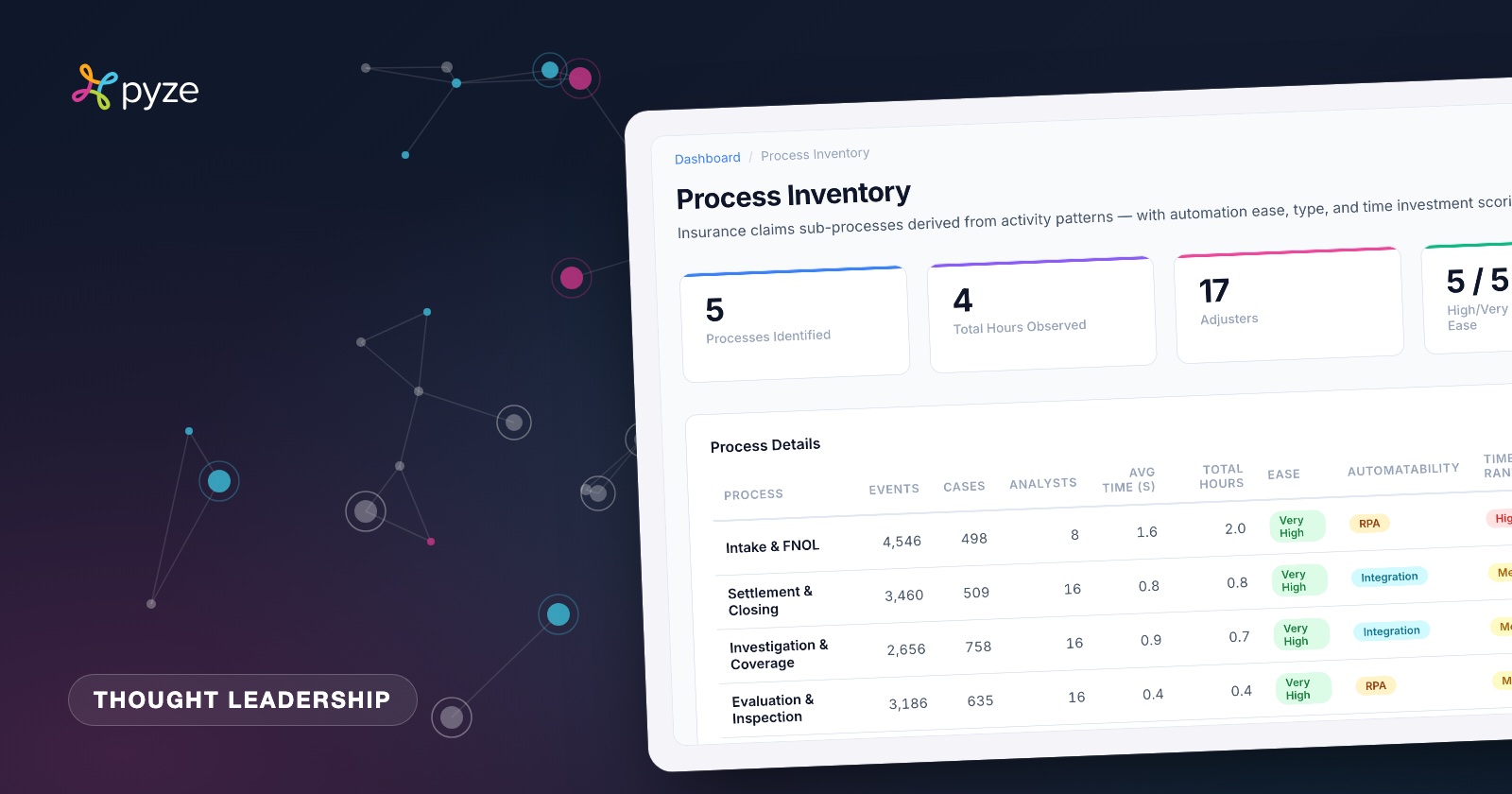
Why Modernization Programs Struggle to Prove Results
Most modernization programs cannot show that the new platform outperforms the old one, because the baseline was not measured on the same terms as the results.
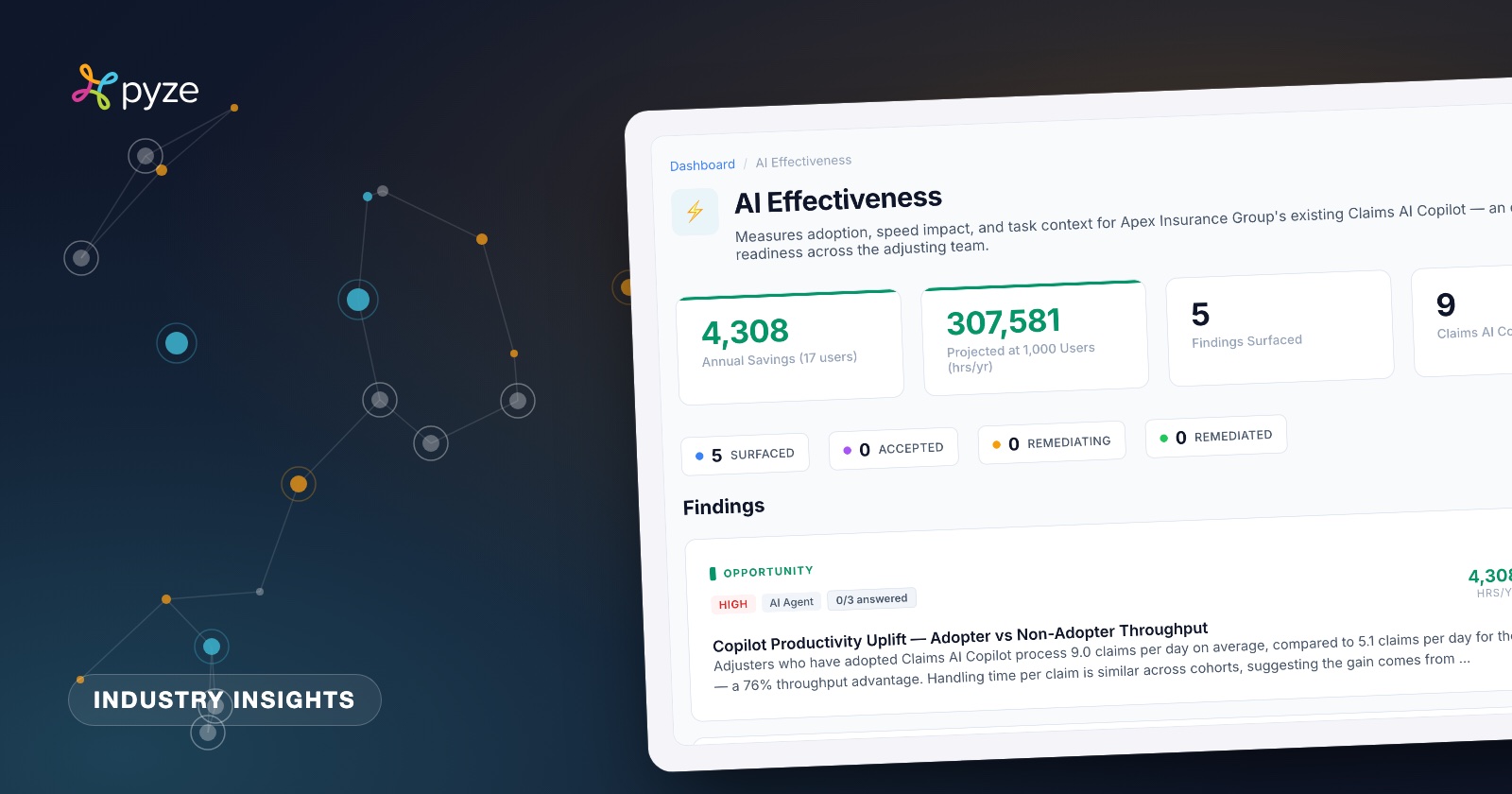
Why Contact Center Modernization Needs Measurement Between Telephony and CRM
In a contact center modernization, telephony and CRM systems each record half the interaction, and the work that sets handle time happens between them.
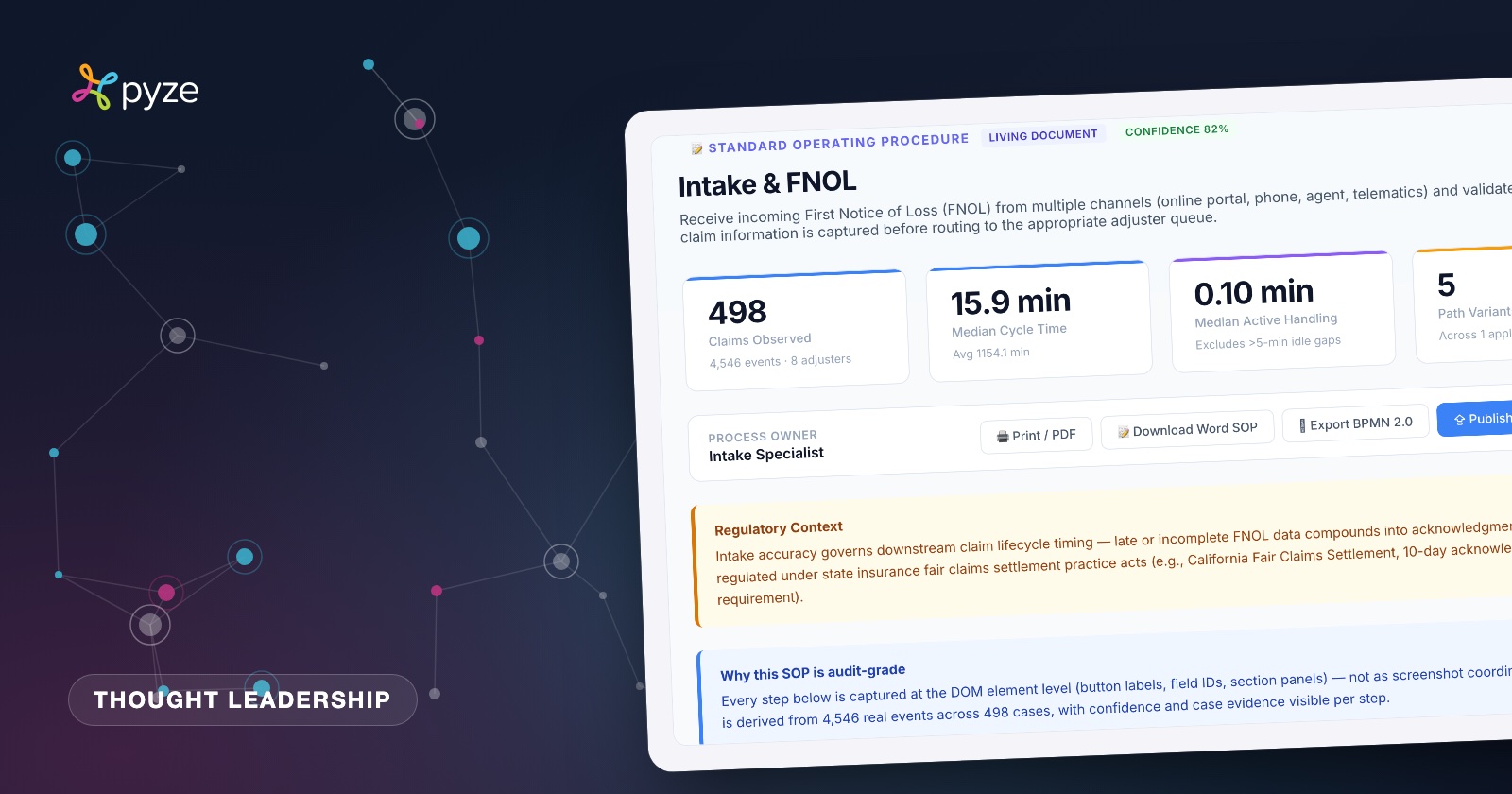
Turning SOPs Into Measurable Standards With Conformance Scoring
Procedures written as prose cannot be scored, so this post describes how to convert SOPs into machine-readable standards and score every human or agent execution against them.
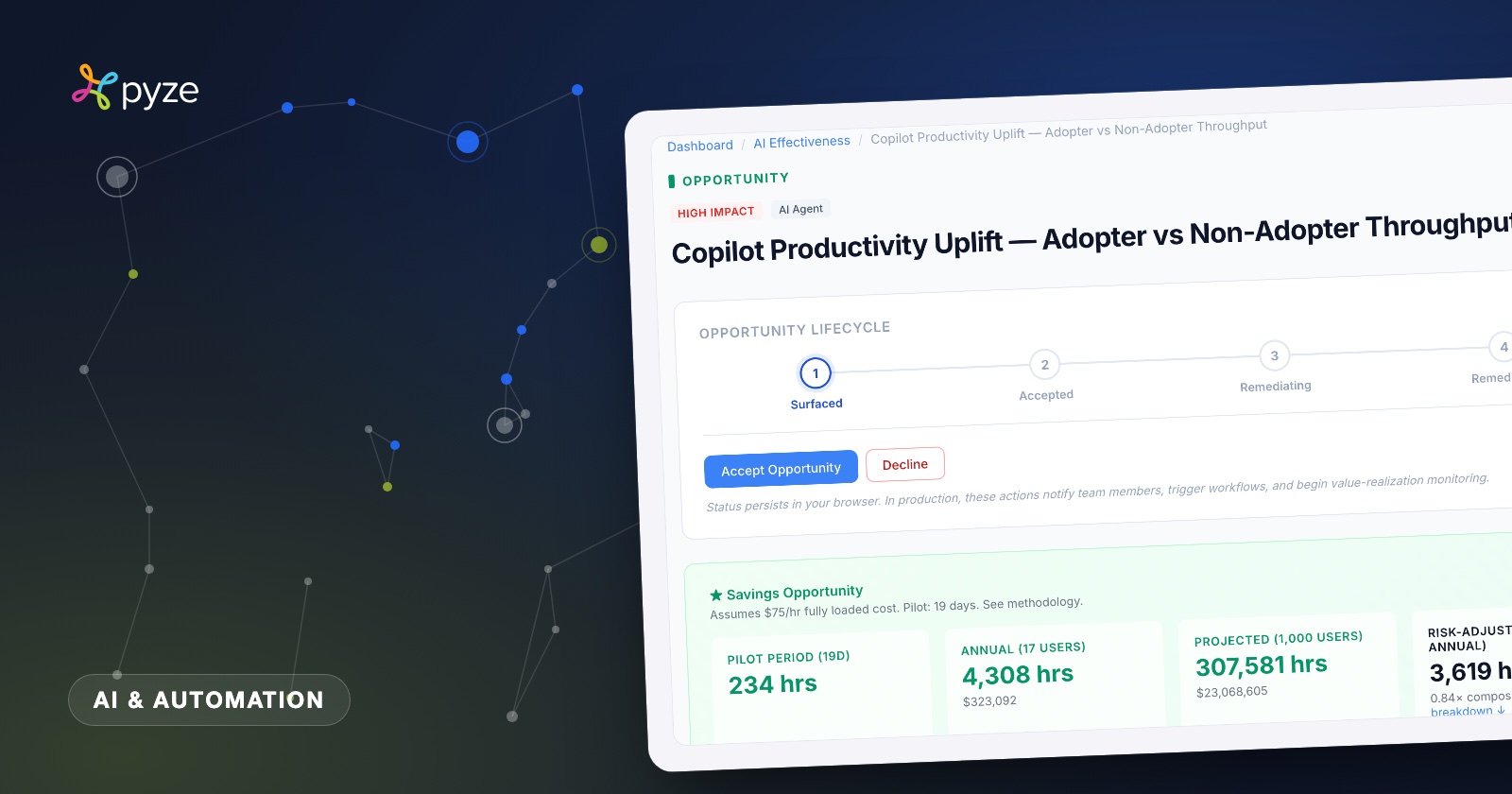
Why Average Handle Time Can Rise After a Successful Agent Deployment
When agents absorb the simpler cases, average handle time on the remaining work rises, so a dashboard that tracks only that number can report a good deployment as a failure.
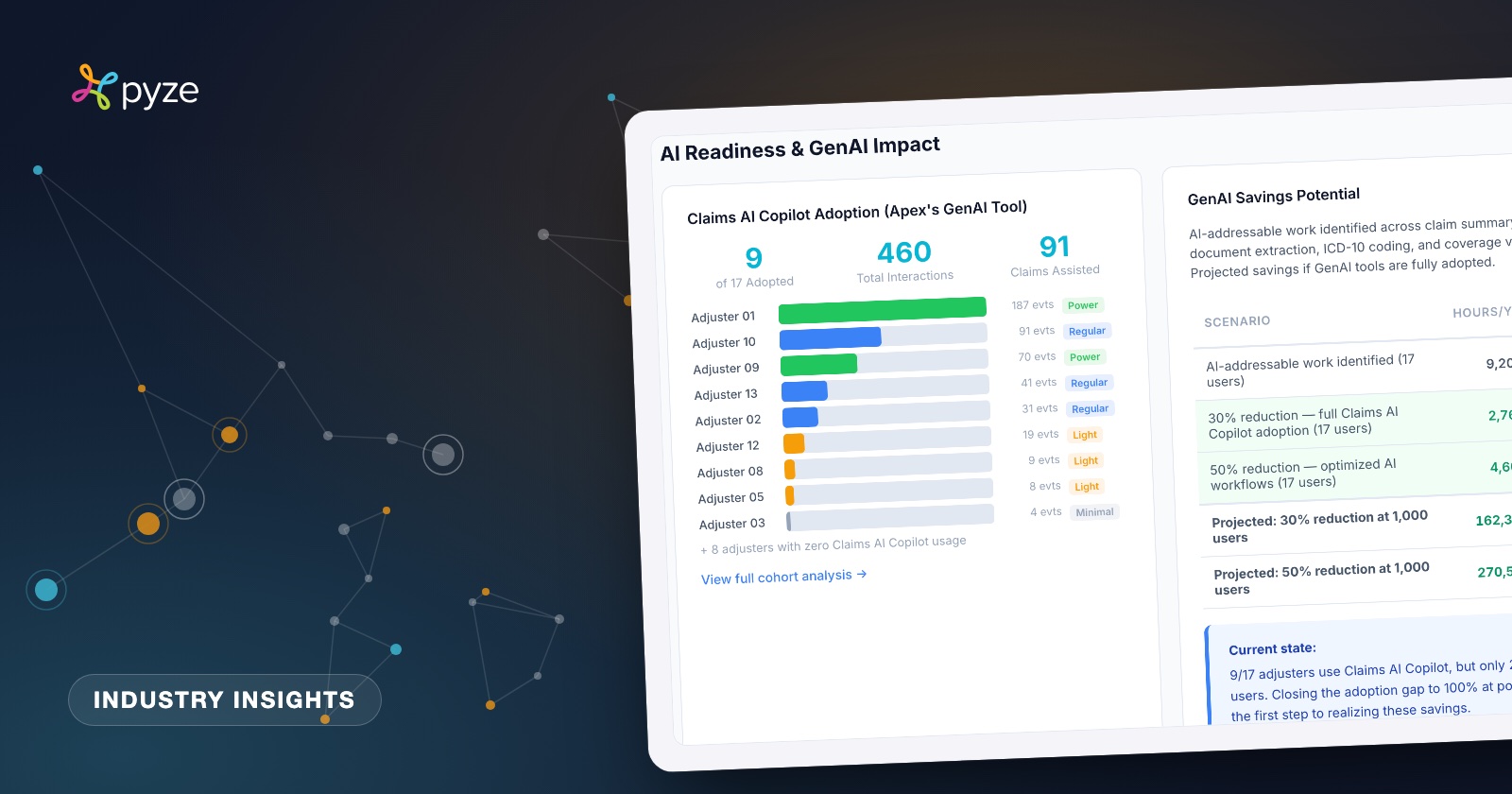
A Conservative Model for Estimating Reclaimable Capacity
An adjustable model estimates how much capacity automation and augmentation could free per 1,000 FTEs, with each assumption stated so it can be reviewed and changed.
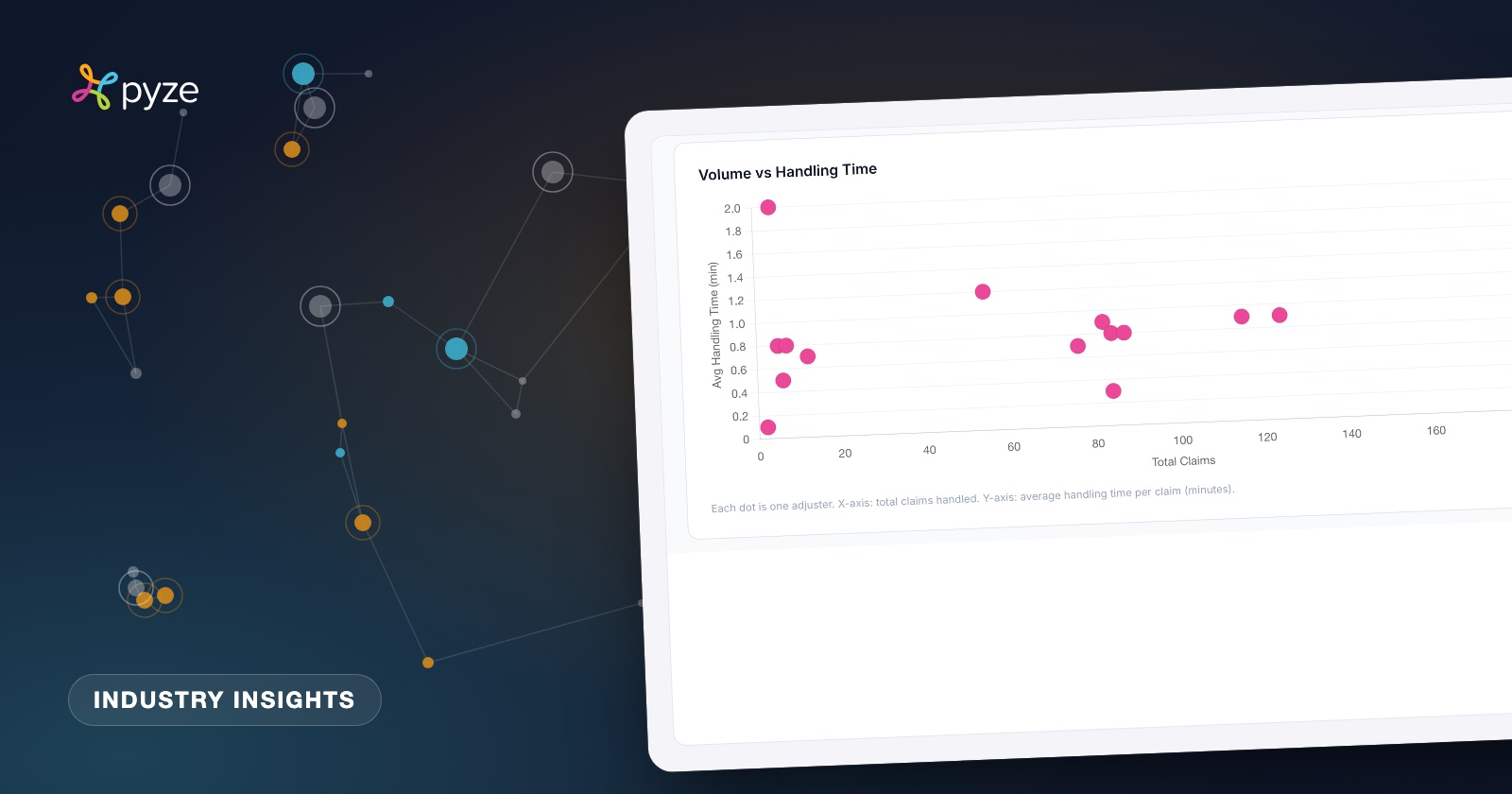
Measuring Productivity at the Process, Step, Task and Activity Level
Case-level handle time averages away the detail of the work, while measurement at the task and activity level identifies automation candidates and sources of delay.
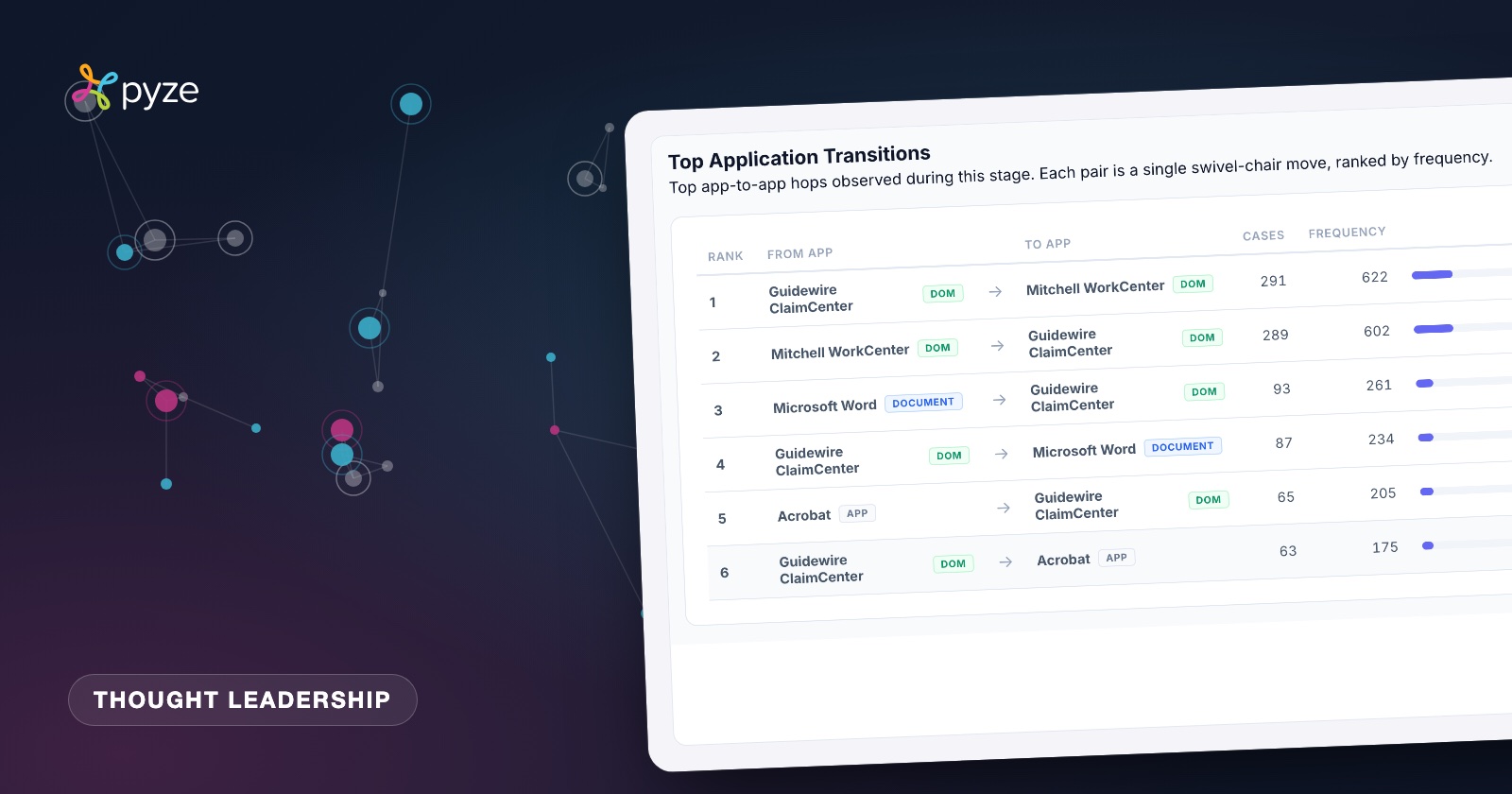
What System Logs Miss About How Work Gets Done
Workflow and core systems record outcomes, while the effort that determines cycle time happens between systems, where it is not logged or measured.